Steam Ferry Conanicut Almost Totally Destroyed By Fire
Click on the images below to see them in our online catalog.
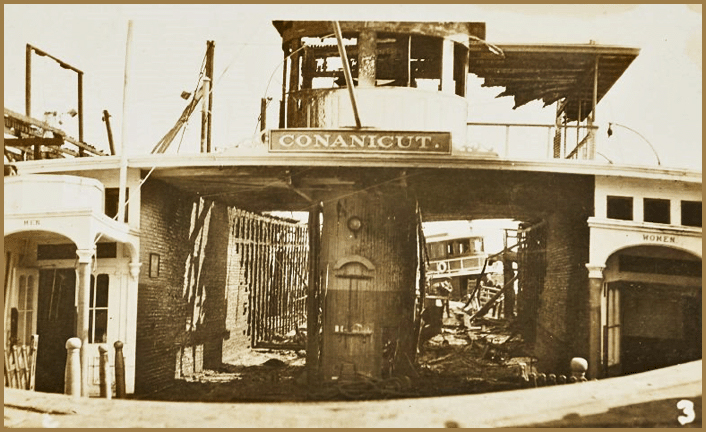
In the early hours of September 20th, 1914, Mrs. Nathaniel Littlefield, of Gardner House, alerted her husband to a fire on the East Ferry Wharf, in Jamestown. Captain Littlefield sounded the first alarm at 2:40am. Smoke was rapidly rising from the smokestack of the steam ferry, Conanicut. Fire Chief Eben Tefft and Capt. Arthur G. Knowles, of the Conanicut, were quickly aboard. Because of the NW winds, the ferocity of the fire was increasing, so a 2nd box was called and the Training Station Fireboat arrived, as well as a truck. For lack of a hydrant, long hoses were used.
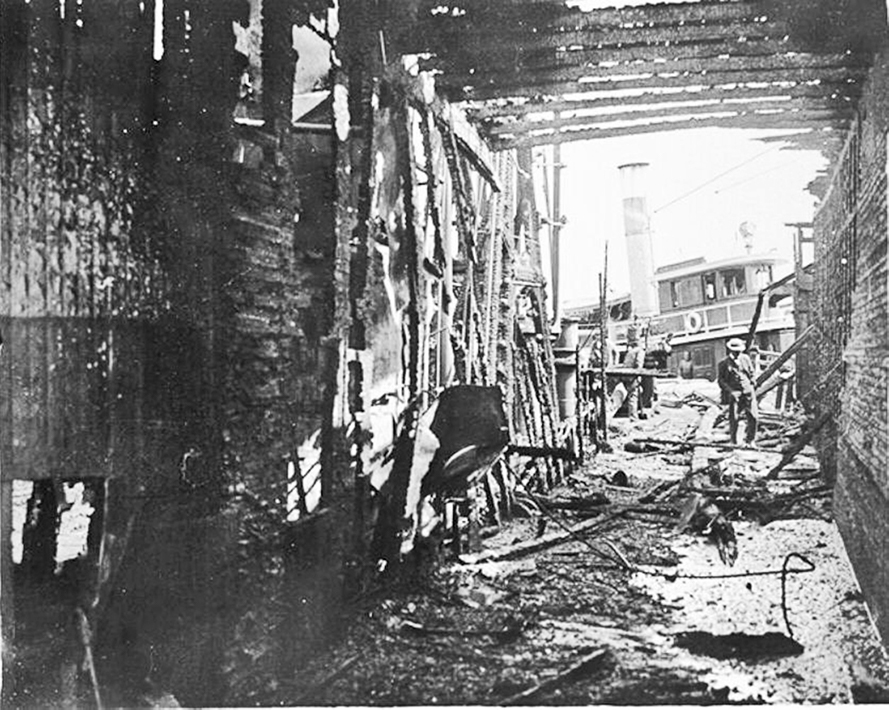
The fire soon spread to the upper parts of the boat. The source of the fire was difficult to determine because falling embers from the upper part were falling and adding to the fire below. The hoses could not reach the fire below, and soon the whole boat was aflame. It was finally decided that in order to save any parts of the boat they would need to sink her. This was done, and when the boat was again raised, her hull didn’t leak, her smokestack still stood, but her engine area was totally destroyed.
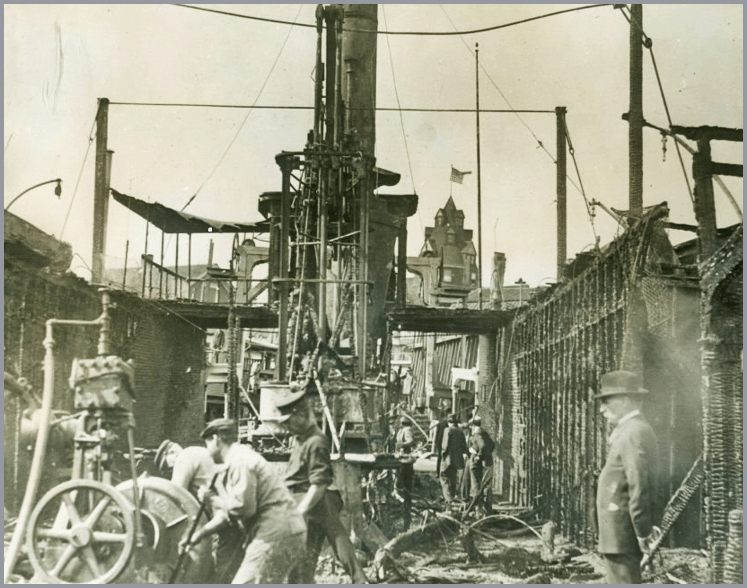

Repair work on Conanicut was completed in New London, Connecticut, and she returned to Jamestown. In 1927, upon the arrival of the new steam ferry, Governor Carr, Conanicut was chartered by Short Line Bus Co. to run between Portsmouth and Bristol Neck. In 1929, upon the opening of the Mt. Hope Bridge, Conanicut was sold for $250 to become a barge in Portland Maine, but she ended up stripped and abandoned.
The Conanicut had been commissioned to be built by the Jamestown Newport Ferry Company, in 1885, to make the run from Jamestown to Newport. She was built in Wilmington, Delaware, and launched in 1886. She was 125 feet long, and referred to as a “faithful craft.”

Click here for more on Fire on Steam Ferry Conanicut
