From Farmhand to Freeholder
This article is part of series written by Peter Fay for The Jamestown Press on August 25, 2022.
Manuel Furtado Dutra arrived barefoot and alone in Jamestown in 1917 when he was 13 years old.
He had never worn shoes in his life, could not read or write, and had never been to school.
Leaving his island home of Fayal in the Azores, Portugal, on the steamship Roma, he arrived in Providence with the minimum $10 in his pocket required by federal immigration policy.
It took seven days to cross the Atlantic, “and the waves went right over the top of the ship. I got soaked and had to let the wet clothes dry on me. I had no other clothes,” he recalled.
According to an interview published in 1980 by Shirley Teixeira Quattromani and Catharine Morris Wright, Dutra was among 100 immigrants to arrive in Jamestown from the Portuguese archipelago around the turn of the 20th century.
The culture of the Azores, a string of idyllic but impoverished volcanic islands in the mid-Atlantic, is deeply rooted in 500 years of farming. Its semi-feudal system, however, resulted in 3 percent of its population owning all the farmland. Tenant farmers suffered frequent crop failures, rendering them destitute.
Between 1916 and 1917, the Roma made 23 voyages carrying roughly 1,400 Azoreans to Providence. Many, including children, ended up toiling long hours in sweatshops, enriching the factory owners. Photos of young barefoot Azorean textile workers featured prominently in magazines during a national campaign to end child labor in the early 20th century.
Almost all Portuguese immigrating to Jamestown were Azorean. By 1920, all 80 of them worked onerous low-skilled jobs as farmhands, teamsters, laundresses and servants, or quarry workers providing stone for building local streets and piers.
Manuel Dutra’s wife, Lillian Pementel Dutra, recalled her father “worked at the crusher crushing rock” near Godena Farm.
John Joseph Madeiros’ grandmother “took care of the laundries for the rich houses,” washing clothes by hand into her 80s.

Gloria Cabral immigrated alone at 14, working long hours at American Screw Co. in Providence. No Portuguese could be found among the skilled machinists or engineers at the Newport Torpedo Station or Jamestown Ferry. Many lived alongside the black families south of Narragansett Avenue.
A1923 study placed Azoreans at the lowest socio-economic status together with African Americans. Azorean infant mortality, the bellwether of a population’s health, was twice as high as among African Americans, and four times higher than the native-born whites. Three-quarters of Azoreans in America were illiterate.
Despite these meager beginnings, the Portuguese in Jamestown often achieved success, especially in their tradition of farming. The Vieira and Dutra farms prospered. One of the few remaining farms is the small Godena (originally “Godinho”) property.
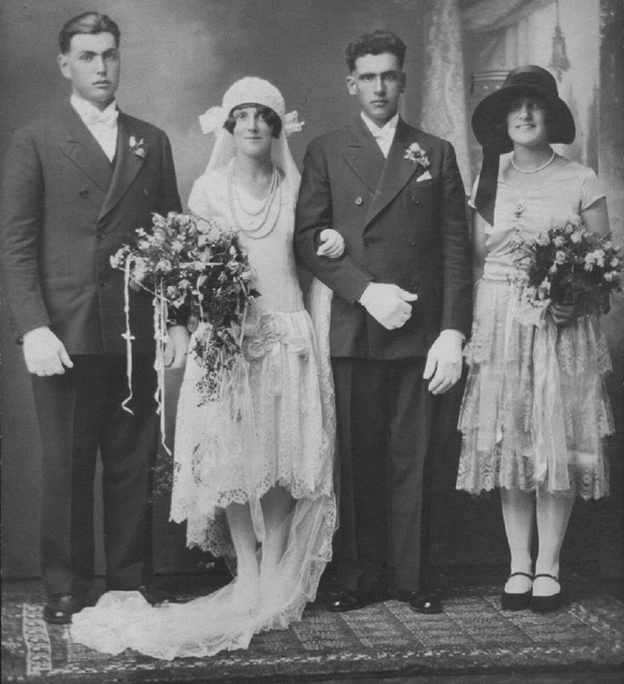
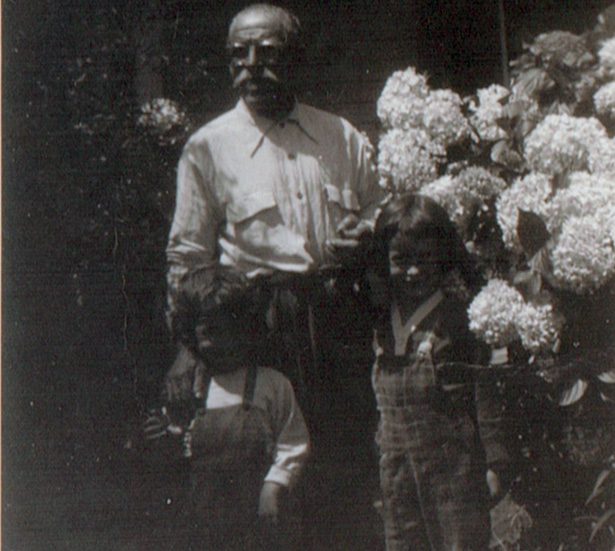
Manuel Coelho Godinho first came to the Newport area in 1897 from Terceira, Azores, at 19 with his bride, Maria, after both his parents died while young. He worked as a farmhand alongside another Azorean, Joseph Miller, who earned $5 per month.
In 1907, Godinho purchased one acre and a house south of Godena Farm for $175 from John T. Carr. Twelve years later, he purchased eight acres surrounding the John F. Weeden house (the Godena homestead) on the west side of North Main Road. For most of his life, Godinho farmed small plots or others’ farms, growing asparagus to sell in Newport.
In 1927, Godinho was one of the five incorporators of the Holy Ghost Society of Jamestown, the cultural cornerstone of the Portuguese community. For decades, the society, with its hall on Narragansett Avenue, sponsored Chamarrita folk dances, chouriço and sweetbread dinners and Pentecost processions from East Ferry.
Six months before Godinho’s death in 1957, his son purchased 22 acres on the east side of North Main Road from the Carr Homestead Foundation for $2,000. That land is now the Godena Farm.
His son, Manuel J. Godena, fiercely protected it, refusing to sell it to Commerce Oil, launching a lawsuit to stop their massive project to construct an oil refinery on the island. Even after the company bought all the surrounding land and bulldozed a lane through his property, he said, “they’re not going to get away with it. That’s for sure.” They did not, and the project was stopped.
Bibliography
Jennings, William J, Jr., and Patrick T. Conley, Aboard the Fabre Line to Providence: Immigration to Rhode Island, Charleston: History Press, 2013.
Quattromani, Shirley Teixeira (comp.). History of the Portuguese of Conanicut Island, Catherine M. Wright, Ed. Jamestown, RI: Jamestown Philomenian Library, 1980.
Williams, Jerry R., In Pursuit of Their Dreams, North Dartmouth, MA: University of Massachusetts, Dartmouth, 2007.
“Injury added to insult”, Providence Evening Bulletin, Oct 31, 1957, 1; “Court asked to bar permit to Jamestown tanker pier”, Providence Journal, Apr. 5, 1960, 32.
